May 12th, 2021

Thanks for asking! It really depends on the dental age of the patient rather than their chronological age. Usually a good time to have your child evaluated by an orthodontist is after the front permanent teeth have erupted into the mouth or if there appears to be extreme crowding of the teeth.
The American Association of Orthodontists recommends that children between the ages of seven and nine should be evaluated by an orthodontist. There are times when an early developmental treatment is indicated to correct situations before they become major problems. In these circumstances the patient will most likely benefit from a second phase of orthodontics when all of their permanent teeth have erupted.
Most full orthodontic treatment begins between ages nine and 14, and lasts from one to three years, with two years being the average. It’s important, however, that children be screened at an early age for Dr. Allen and our staff to assess if your child can benefit from orthodontic treatment and when treatment should begin.
We hope this helps, and invite you to give us a call if you have any questions about your child’s treatment at Davis Orthodontics.
May 5th, 2021
"Motherhood: All love begins and ends there." - Robert Browning
We would like to take this moment to thank all the great moms out there for being so great during their child’s visits to Davis Orthodontics. Whether it’s driving their kids to regularly scheduled appointments or for “being there” while their child is treatment, the moms who come to our office are all stellar individuals, so Dr. Allen and our entire staff would like you to know that we appreciate you all!
Happy Mother’s Day and enjoy your special day!
April 28th, 2021
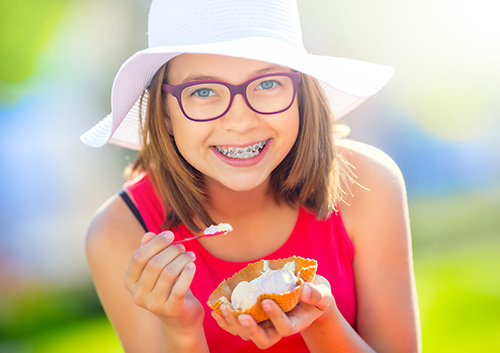
Whether you’re heading out for a day with friends or running from classroom to volleyball practice, you don’t always have the luxury of taking care of your braces or aligners in the comfort of your home. But don’t stress! Here are some suggestions for handy items you can take with you to handle most of the dental situations that might come up.
Basic Care Kit
- Travel Toothbrush—the perfect size for quick cleanings after a meal on the go. You might want to bring a travel size tube of toothpaste as well.
- Dental Floss, Threader, and Dental Picks—you don’t want something stuck in your teeth or braces through three hours of play rehearsal.
- Water Bottle—if you don’t have time to brush, a good rinse will help keep teeth and appliances clean.
- Small Mirror—to make sure your smile is picture perfect after eating.
- Our office phone number—just in case. If something happens to your braces or aligners, or if you suffer a dental emergency, call our San Diego office immediately.
For Braces
- Orthodontic Wax—if one of your brackets is irritating your mouth, you’ll be ready.
- Braces-Friendly Snacks—soft, healthy foods that will help keep your energy up while keeping your braces intact.
For Aligners or a Retainer
- Your case! If you need to take your aligners or retainer out, use your case to protect them and keep them from getting lost. You have better things to do after lunch than sifting through a garbage can full of used napkins. Much better things.
All of these items can fit easily in a case or bag in your glove compartment, locker, or backpack. Want more tips? Talk to Dr. Allen and our team on your next visit, and let’s work together to make caring for your orthodontic appliances a quick and convenient addition to your busy schedule!
April 21st, 2021

During the early days of the environmental awareness movement, those who demonstrated against pollution, toxic chemicals, and the general public health were known as hippies. The early 1970s were a time of change, and assertions that we needed to pay more attention to the Earth's atmosphere were generally dismissed. But within a couple decades, it had become clear that the previous generation was right; the citizens of the world needed to become more environmentally conscious.
Many people feel that they can't make a difference if they don't do something big. But caring for the environment doesn't have to be an all-or-nothing concept. In fact, the little things you do can add up to make a great impact, especially in our community. Here are a few ways you can help the environment on Earth Day, April 22nd and all year around.
Four Small Ways to be Environmentally Friendly
- Recycle Your Textiles. Nearly 21 million tons of textiles are added to American landfills each year, according to the Environmental Protection Agency. Donating your unwanted clothing to a secondhand store or an organization that repurposes fabric helps cut down on solid waste and conserves natural resources.
- Reduce Usage of Disposables. Plastic bottles and bags, disposable diapers and other things we can use and toss out are convenient, but they're not necessary. Simply choosing to replace one of type of disposable with a reusable product can help you cut down on waste that has a large negative impact on our environment.
- Conserve Water. If everyone in the United States turned off the water while brushing their teeth, more than 1.5 million gallons of water could be conserved. Turn the water on long enough to wet your toothbrush for brushing and rinsing, and then immediately turn the water off again.
- Turn Off the Lights. Flip the light switch to "Off" if you're going to leave a particular room for 15 minutes or more. This will conserve energy on incandescent light bulbs and cut down on cooling costs.
It's not necessary to be an activist or install solar panels all over your home to help the environment. Although you can do these things, the little everyday measures make a big difference in helping to conserve energy and the environment, while reducing your carbon footprint. Our team at Davis Orthodontics wants to remind you to celebrate Earth Day and help the environment, knowing that it will benefit your and your children's generation.